for a moment i thought all my excitement and planning would be for naught.
it started when christian p announced that he was planning a birding trip to zamboanga which coincided with a four-day weekend school holiday. western mindanao! even if adri was planning to do a recon trip elsewhere, i decided to sign-up. (of course later he passed up the recon trip to join us... envy got the better of him!) when i saw the final group going: christian, leni, carmela, ixi, adri & myself - i thought, perfect! i booked the tickets and started my research.
and what would happen a few days before our departure? a group of birders, kidnapped from the southern philippines!!! emails, phone calls and text messages exchanged... our already deep concern for the birders was deepened further by our impending trip. what were we to do? zamboanga, being the gateway to basilan, jolo and tawitawi, had always gotten the bad end of the stick. these were wonderful, beautiful places which were unfortunately more popularly associated with news images of kidnappings and violence.
christian was confident zamboanga city was safe. after prayers and meditation and research, i consulted with the others and (except for ixi and mikeli), we all convinced each other to push through. (yes, inspite of the over-all clamor from the other birders to cancel our trip: "pag may nangyari sa inyo kasalanan nyo pa," "hay, if anything happens to you, bahala na kayo, we won't pray for you or feel sorry for you anymore," "wag na kayo pumunta, kahit walang mangyari it's causing a lot of angst to our friends")
and what a good decision that was!
we had a grand time in zamboanga! when we arrived we met up with our guide, joel b, the asst pasu. he introduced us to mary june b, who was the acting regional dot director. both expressed their pleasure (and surprise!) that we had arrived to bird in spite of the recent incident in tawi-tawi. we had an express tour of downtown starting from our hotel, the lantaka, which was conveniently located within walking distance of most of the interesting sites downtown: the popular paseo del mar, fort pilar, the city hall and several plazas. june was an excellent host, taking us around town herself, treating us to merienda (and lunch on our last day!) and even bagging us souvenir chabacano dictionaries and vinta models at the city tourism office!
historic fort pilar
badjao kids at the paseo del mar
the city hall from plaza rizal
very nice rizal monument: libertad, patria, amor, el deber & sisa,
maria clara (& forgot the third icon, was it elias?)
swallow-ing in downtown zamboanga city
before dinner, we were taken to see an amazing sight of thousands of pacific and barn swallows roosting on wires and buildings right smack in the middle of downtown zamboanga city. these birds had first appeared in great numbers around 10 years ago according to june, and while their numbers dwindled when the migrants left, they were there the whole year round! it was amazing that these swallows chose those particular three streets, around 4-5 blocks. these were probably the noisiest, busiest streets in town! traffic packed the streets, people walking everywhere, loud music blared from malls and restaurants. they were so neatly spaced from each other that we estimated that at around 8 swallows per meter of wire, at least 5 wires per side of the street, 250,000 swallows!!! the people and the swallows existed in harmony, both going about their business.
thousands of roosting swallows in the heart of the city
we had 2 birding sites in our plans, both part of the pasonanca natural park. both parks were part of the lowland forest which served as the watershed which meant it was strictly protected area. amazingly, the first site, the intake area, was just 20 minutes from downtown! in manila, i would get up even earlier in the morning just to go to makiling, the nearest forest to the city! we birded at the intake both on the first day and on the morning of our last day in zamboanga.
at the beginning of the trail to the intake
the intake had two trails, one going uphill which we explored in the morning, and another past the intake pool, crossing the river to forest station 88. the trails were absolutely no problem at all, especially with the perfect weather we had! The river crossing was fun too (well on the second day it got more complicated because the rains had made the river deeper and the current a wee bit stronger), even if the river bed was full of slippery (if not small and sharp) stones!
crossing the tumaga river at the intake on day 1: smiling & relaxed
crossing the river on day 3: intense concentration with deeper water
& stronger current after the rains
the second site, baluno, was a little farther, and we had to take a 4x4 pick-up. it was a whole hour away (that statement is dripping with sarcasm... that by my standards is still so near!). the research station here was a little more run down, but was convenient enough. the trail here started at around 700 masl going down an old graded road to around 400 masl. we added a few more species to our list here like the philippine trogon, crested goshawk, philippine needletail. unfortunately, both the mindanao and rufous hornbills made their presence felt by their loud calls only. our second day of birding was cut short by a sudden shower of rain, and we spent the rest of the afternoon making our birdlist while zamboanga bulbuls danced in the sudden shower in the trees around the station.
the trail at baluno
our two endemic targets: the zamboanga bulbul and the white-eared tailorbird, both restricted to western mindanao, were easy enough to bag. we saw both on the first morning of birding at the intake, and again everyday we birded.
i absolutely love, love, love the tailorbird! it was really my primary target for the trip. it marks my 7th tailorbird species... the last of all (realistic) tailorbirds in the philippines for me to see (i say realistic because the 8th species, the ashy tailorbird, is a non-endemic that has only been found in cagayan sulu!). this includes my tailorbirds in the bank: the rufous-fronted tailorbird (philippine tailorbird split) and the rufous-headed tailorbird (mountain tailorbird split).
and as a bonus, it posed quite well for me in baluno:
honestly, the zamboanga bulbul was really just a bonus for me. it's a bulbul that's similar to the ubiquitous philipine bulbul, except it's a bit larger, its throat is unstreaked, its crown darker and its belly whiter. that it's confined to western mindanao is really its best claim to fame. strangely, although it is relatively easy to find, it isn't as common as the philippine bulbul. and it had this habit of always perching at a level waaaay above our heads. hence the belly-view, back-lit photos.
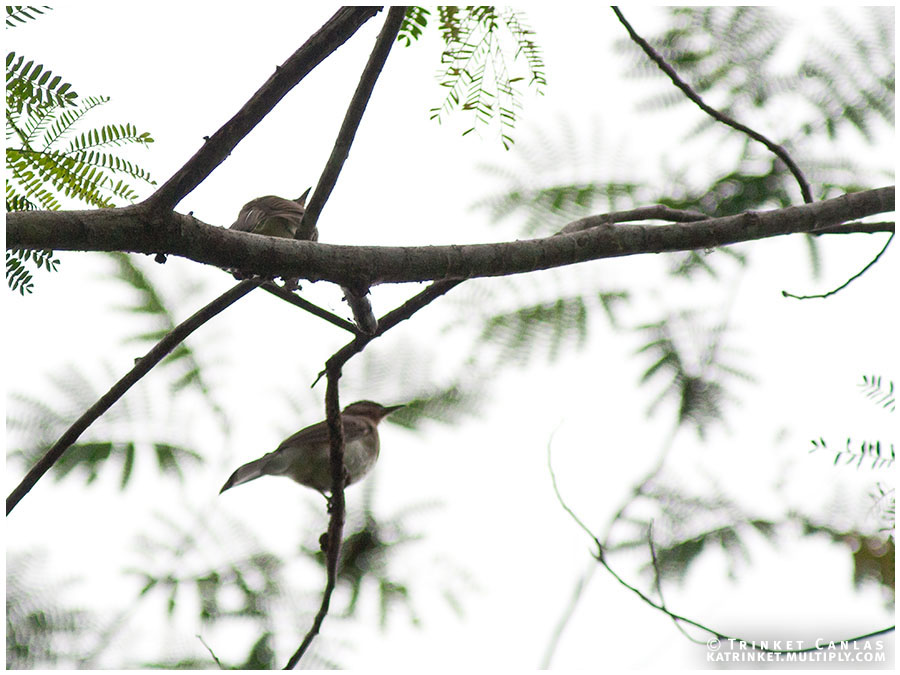
the ease of birding was what surprised me the most in zamboanga. true, i might have been more concerned with security before i got there, but joel's excellent arrangements didn't make me feel uneasy at any time. the logistics were great: the trails were quite easy, there were always facilities to eat and rest and pee nearby, and... the lunches were to die for. shrimp in alavar sauce, shrimp sinigang, grilled tuna, fish kinilaw, ripe mangoes, fresh marang and bananas - need i describe any more? and in both intake and baluno, we could actually take lunch time naps! with a choice of indoor mattress or outdoor bench! how spoiled can a birder get?
not your typical birding lunch fare
nor your typical birding break
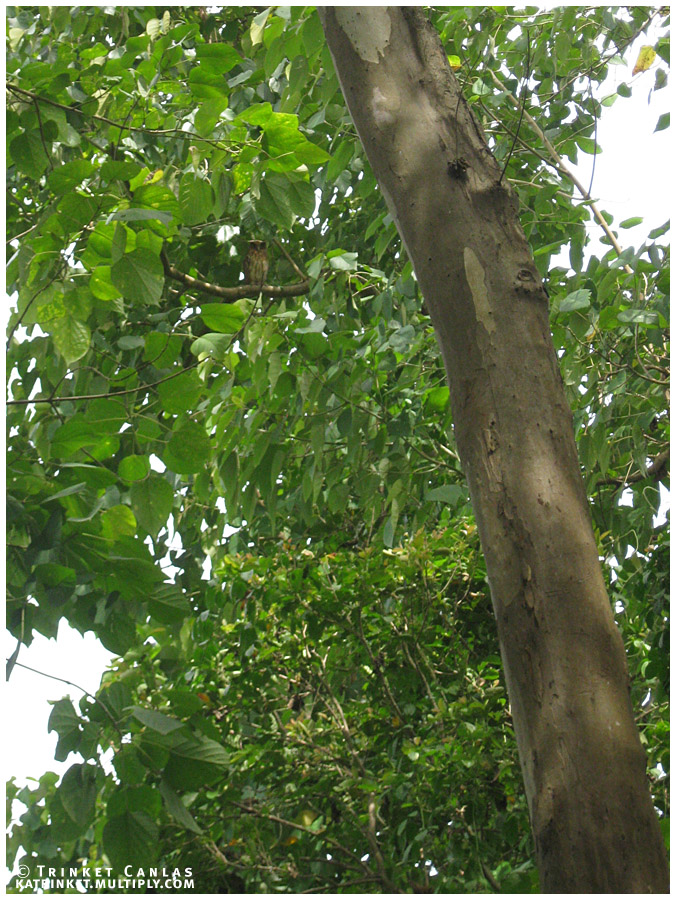
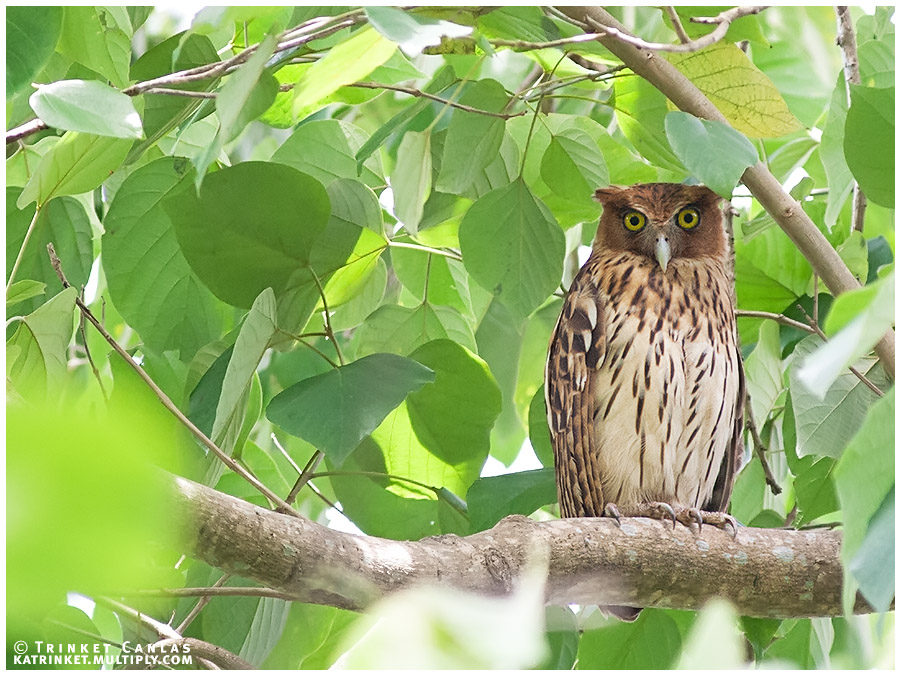
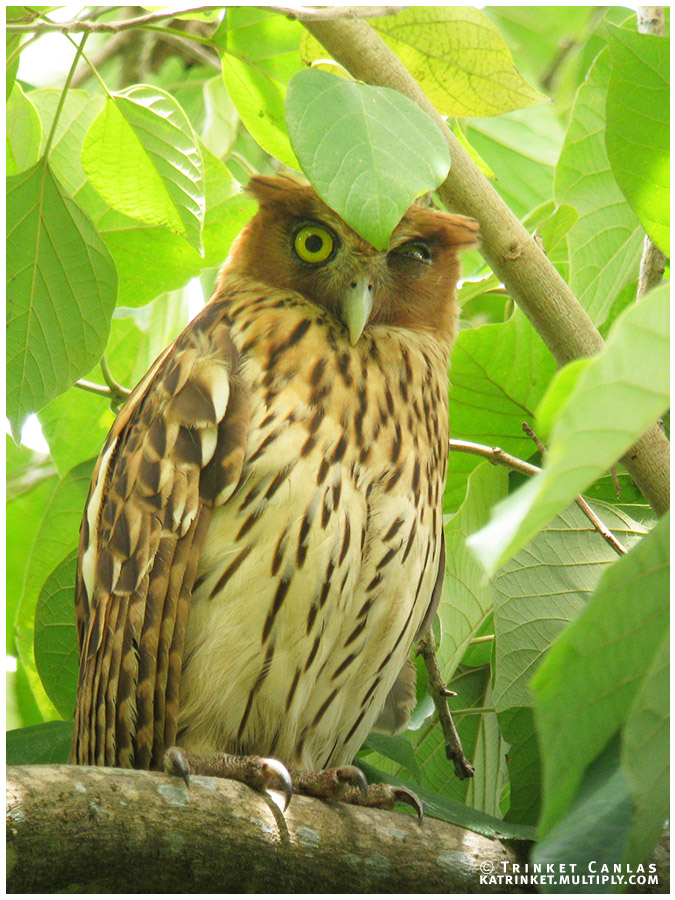
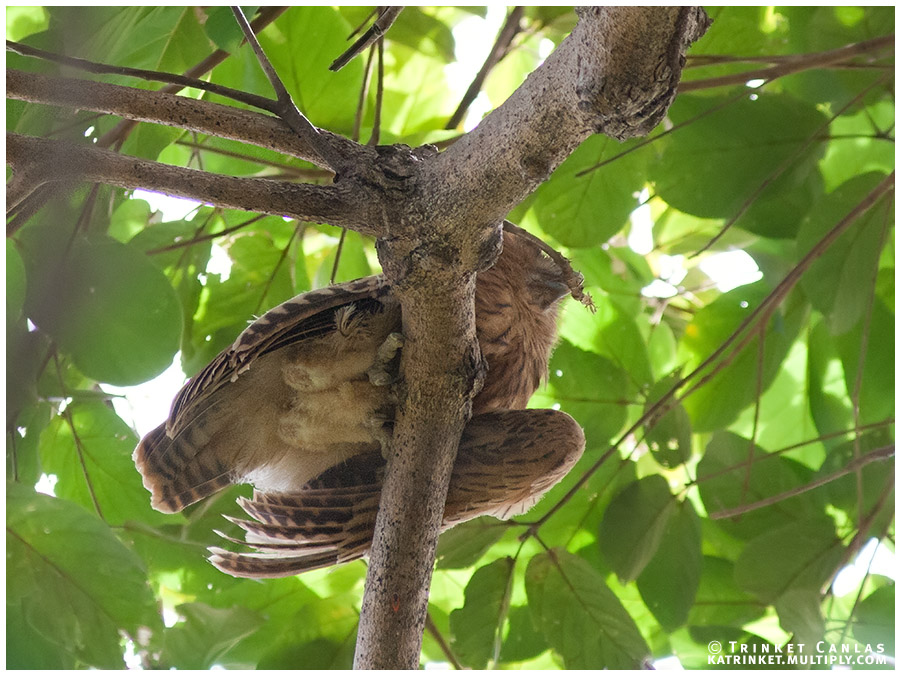
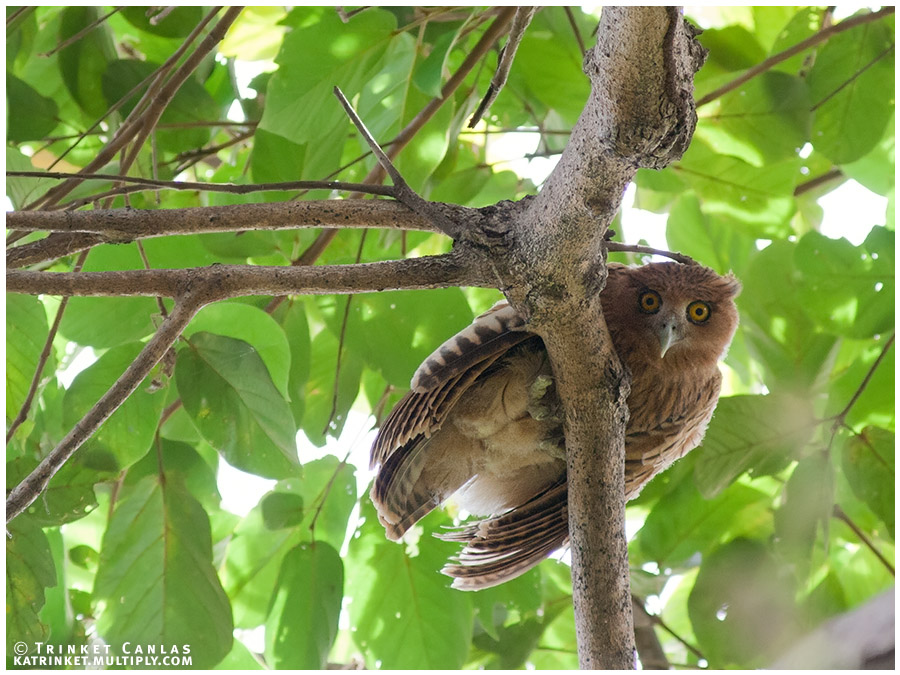
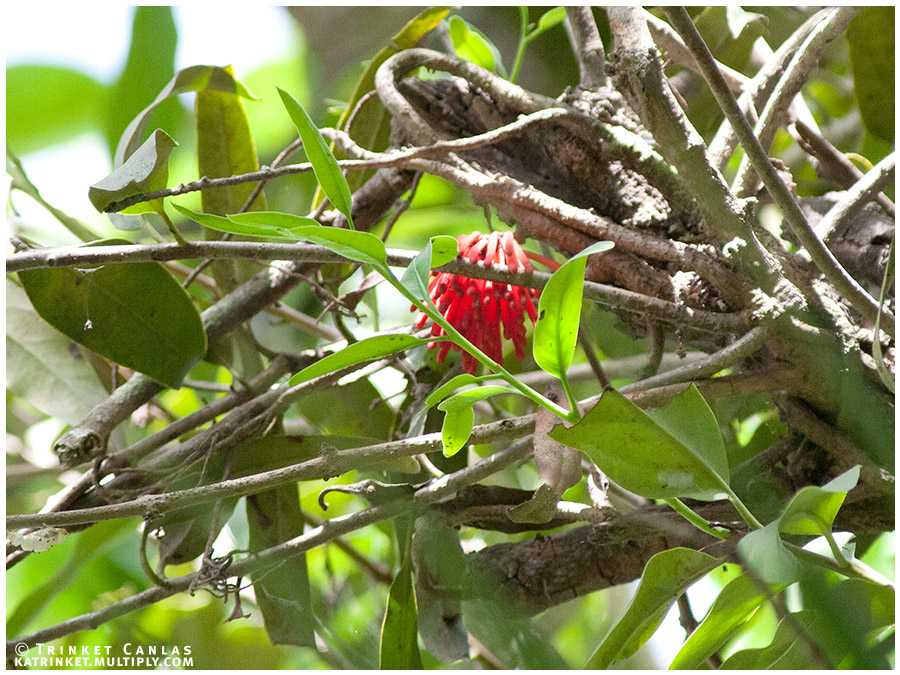
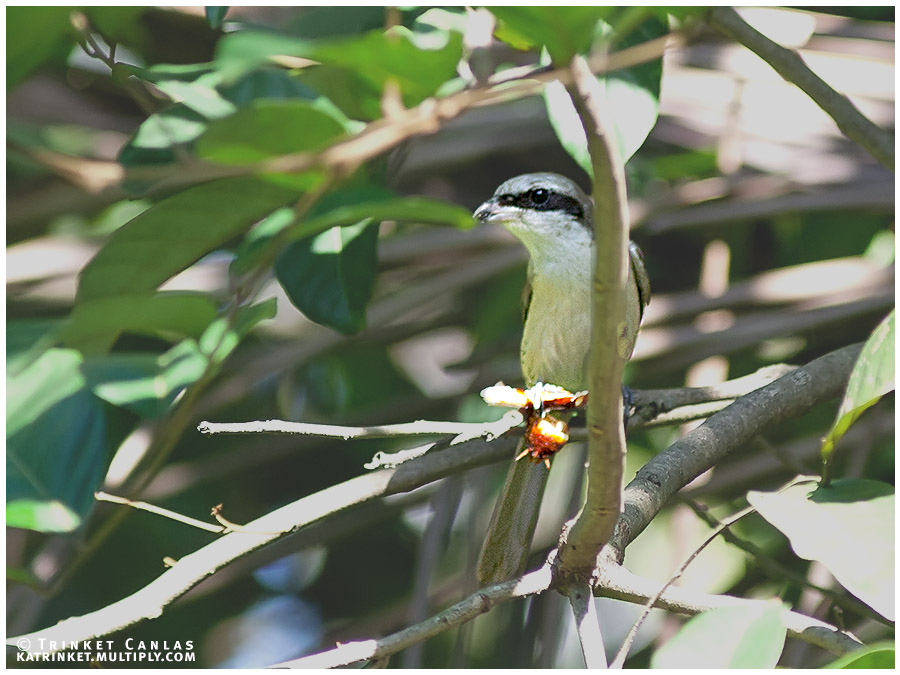
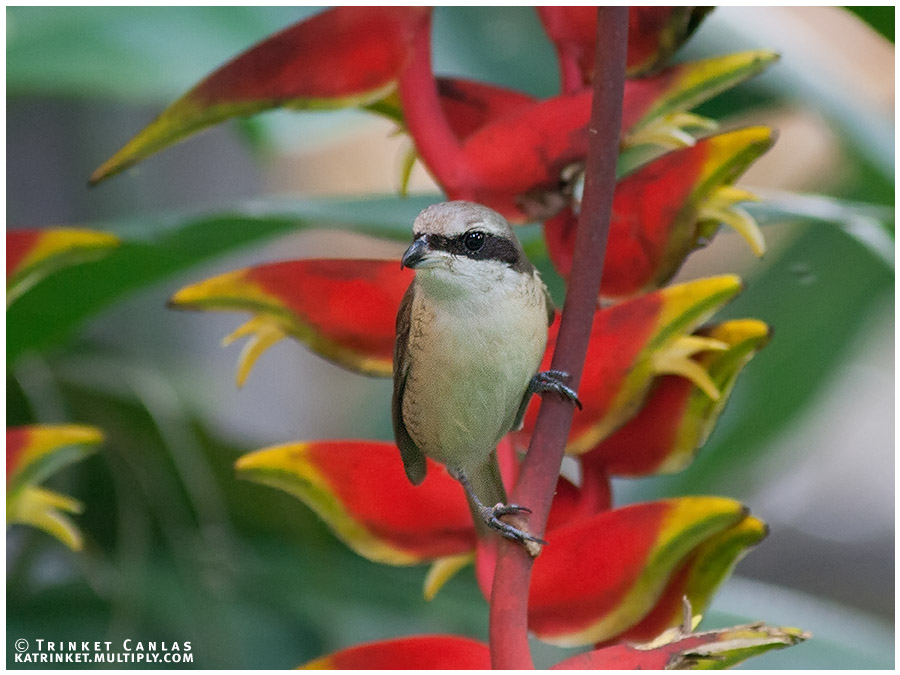
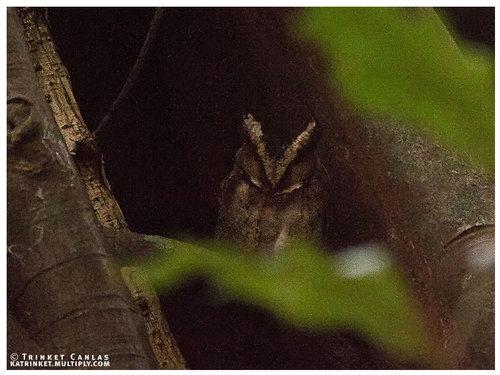
then again, i did expect there to be more birds. we dipped on the hornbills and the scarlet minivet (another of my targets, we must have been unlucky since joel said "malas nalang kung di natin makita yun" at baluno) and the little slaty flycatcher (christian's wish) and the broadbill (but expecting that was really reaching far and deep i thought, so no big disappointment there). still, it was the first time there for all of us in the group, so we really had no expectations to set ours to. though the forest wasn't thick with birds as i wanted, there was never really a dull moment. we had excellent views of a red-bellied pitta at the intake (twice at the same spot, probably the same bird!). a sleeping philippine scops owl (another bird in the bank, mindanao lowland scops owl) in a balete tree hollow was a wonderful surprise. a little spider hunter (again a bank bird: orange-tufted spiderhunter) was kind enough to come and feed on a torch ginger flower right in front of us as we were all seated and eating our morning merienda. noisy racquet-tails flew overhead as we crossed the river at the intake. philippine drongo-cuckoo, serpent eagles, white-bellied woodpeckers, black-faced coucals, philippine trogon were heard and seen. small birds were not lacking as mixed flocks of flowerpeckers (red-keeled, orange-bellied, and buzzing mostly), black-naped monarchs, everett's white-eyes and pygmy babblers were seen. we even bagged the juliae race of the purple-throated sunbird, which we initially misidentified as the flaming sunbird (which was not supposed to exist in mindanao!) with its bright yellow belly licked by orange - very different from the other races of purple-throated sunbird!
i thought this was a zamboanga bulbul, but des corrected me and said it's maybe a wattled bulbul... which was probably the case...
this tree had many birds aside from bulbuls like several pygmy babblers... very exciting to us birders!
the usual hide-and-seek with this jewel of the forest floor: a red-bellied pitta
a sleeping philippine scops owl almost brought the house down
the philippine falconet: cute and fluffy as always
3 serpent eagles flew above us crying mournfully
a crested goshawk landed nearby to our surprise
a philippine trogon perched in the shadows
flowerpeckers, like this buzzing fp, seemed to be everywhere
cheerful orange-tufted (aka little) spiderhunter
there was no shortage of butterflies either
so the pleasures of pasonanca birding far outweighed the missed aspirations. and with the wonderful company of optimistic birders (who gamely counted subspecies lifers!) and the warm welcome of the locals (who fed us as much as they guided us and listened to our birding stories), zamboanga was the surprise that almost didn't happen!
the pasonanca team (minus joel)
gracias zamboanga!